/ ˈmōt-särt /·noun.
Not the composer — though he’s one of the greats I admire, and also turns up on my music page. Read it
again, slower: MO’s art. That’s the one I mean here — the other language I’ve
always thought in, and the work I lose whole hours to.
Art is the other language I think in. I make it, I live with it, and I lose whole hours to it
— not as an investment, but because a great painting can say in a single glance what I’d struggle
to put in a thousand words. Here’s some of what stops me where I stand.
Warhol saw what the rest of us missed — that the ordinary, a soup can, a face, a headline, could
become iconic simply by how you chose to frame it. He blurred the line between art and culture, commerce
and creativity, and I’ve never looked at either the same way since. The thirty-two soup cans first hung in Los Angeles in 1962 and most of them didn’t sell; the gallery’s owner, Irving Blum, paid a thousand dollars for the whole set and kept it together. In 1996 the Museum of Modern Art acquired it from him in a deal valued in the tens of millions. That is where I first saw him, too.
Picasso, because he refused to stand still. Period after period, never comfortable, never finished. I first stood in front of his work at the National Gallery in Washington, and what struck me wasn’t any one canvas but the distance between them — the same hand, refusing to repeat itself. He painted Les Demoiselles d’Avignon in 1907, showed it to friends who recoiled, and kept it rolled up in his studio for nine years. That is the reminder I take from him, and it is the one I return to most.
And abstraction, which is where I go when I want a painting to ask something of me instead of telling me. A canvas that trusts you to bring your own meaning, and rewards you for standing still long enough to do it. Sometimes the truest thing a painting can do is refuse to explain itself.
Kandinsky put cannons in the corner of Improvisation No. 30 in 1913, a year before the war, and insisted they meant nothing. The picture, he said, had arrived on its own.
Mondrian banned green from his palette and diagonals from his lines. Turning the whole canvas forty-five degrees was the one way he let a diagonal in.
Hilma af Klint painted The Ten Largest in 1907, years before anyone else’s first abstraction, and ordered that they not be shown until twenty years after her death. The world caught up in 1986. I saw them at Glenstone, in Potomac, and understood why she painted them taller than a person.
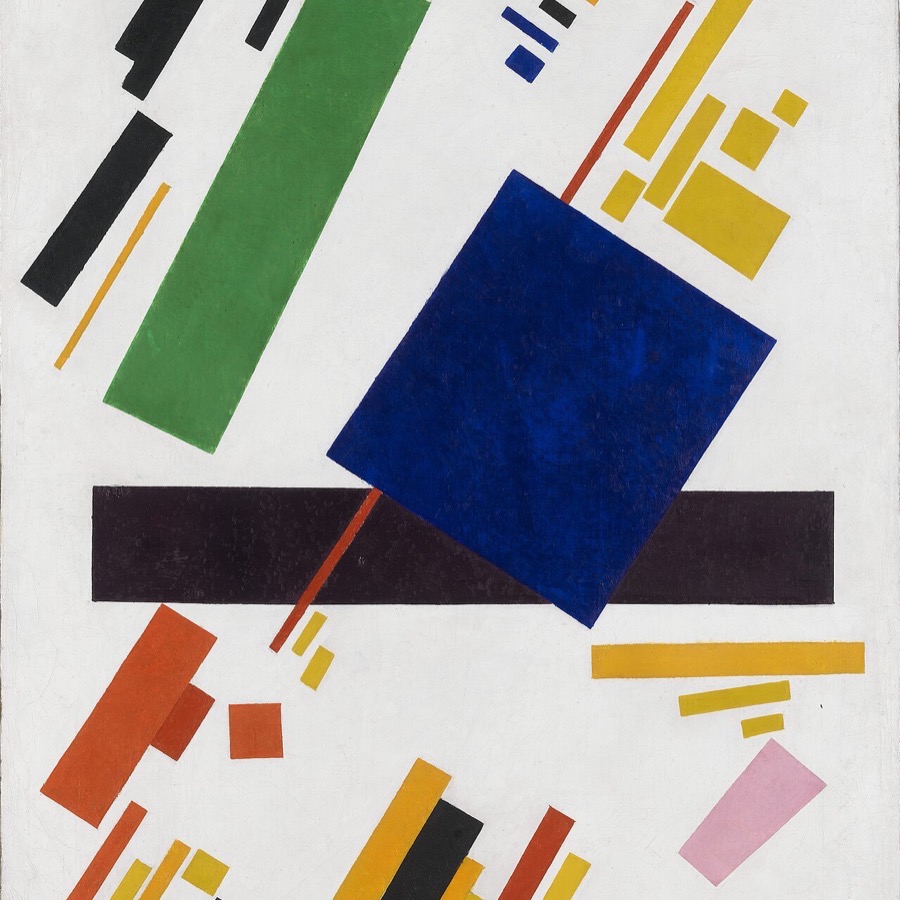
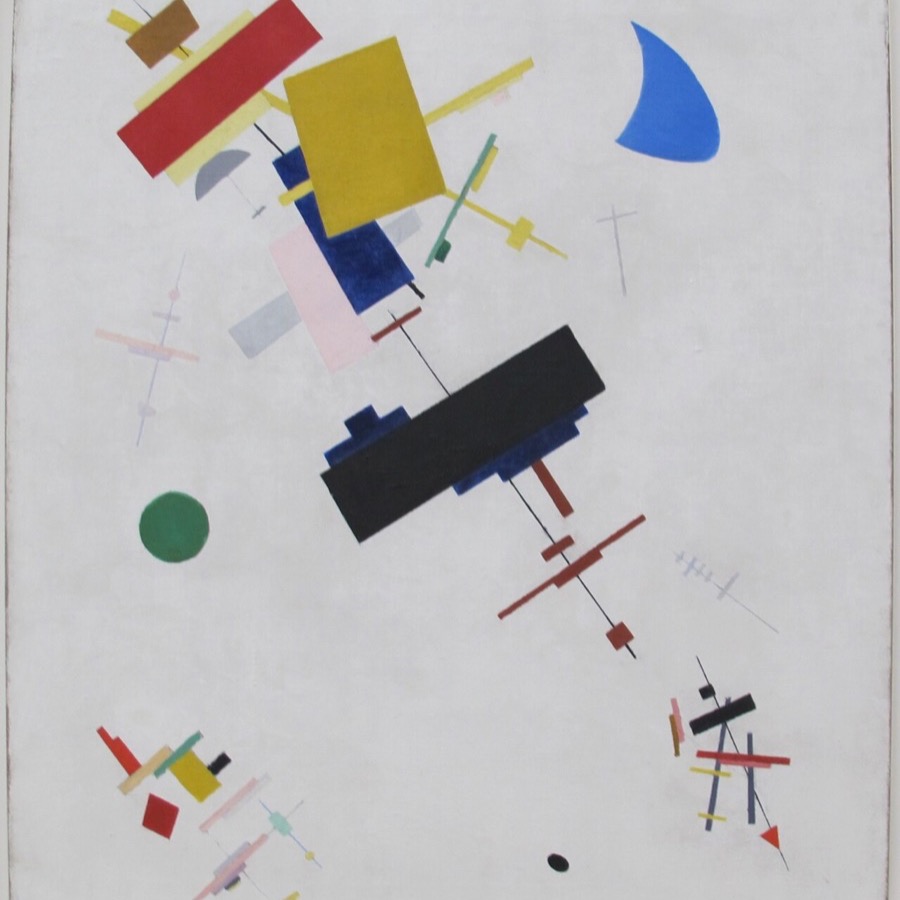
Malevich hung his black square high in the corner of a Petrograd room in 1915, the spot a Russian home keeps for its icon. He was telling you exactly what he thought a painting was.
Vasily KandinskyImprovisation No. 30 (Cannons)1913Piet MondrianLozenge Composition with Yellow, Black, Blue1921Hilma af KlintThe Ten Largest, No. 3 (Youth)1907Kazimir MalevichSuprematist Composition1916Vasily KandinskyPainting with Green Center1913Piet MondrianComposition (No. 1) Gray-Red1935Hilma af KlintThe Ten Largest, No. 7 (Adulthood)1907Kazimir MalevichSupremus No. 561916
Public domain — Art Institute of Chicago and Wikimedia Commons
“Mastery isn’t somewhere you arrive. It’s being willing to break your own rules, again.”
— what Picasso taught me, standing in front of the work